
For most teens, getting a first job is exciting. Whether it’s babysitting, life guarding, scooping ice cream, or working retail, that first paycheck feels like proof that you’re growing up and earning your own way. But many teens are surprised when they open that paycheck and discover that the amount is less than what they expected. This is because of something called gross pay vs. net pay.
You might have calculated your hours in your head—“$15 an hour times 20 hours is $300”—only to see your paycheck for $250 or less. Where did the missing money go? The answer lies in understanding the difference between gross pay and net pay.
Knowing this difference is one of the most important money lessons you can learn as a teenager. It affects how you budget, save, and plan for bigger goals. In this guide, we’ll break it down step by step, so you’ll never be surprised when payday comes again. And for a more extensive guide on finance tips for teens, check out our article, “11 Money Lessons Every Teen Should Know”.
What Is Gross Pay?

Gross pay is the total amount of money you earn before any taxes or deductions are taken out.
Think of it as the “sticker price” of your paycheck. It’s the amount you get when you multiply your hours worked by your hourly rate, or if you’re on a salary, it’s the annual amount divided by the number of pay periods.
Examples:
- You work 20 hours in a week at $15 an hour.
- Gross pay = 20 × $15 = $300.
- Gross pay = 20 × $15 = $300.
- You’re on a part-time salary of $24,000 a year, paid monthly.
- Gross monthly pay = $24,000 ÷ 12 = $2,000.
- Gross monthly pay = $24,000 ÷ 12 = $2,000.
Gross pay is simple math. But here’s the thing—you don’t get to keep all of it. That’s where net pay comes in.
What Is Net Pay?
Net pay is the actual amount of money you take home after taxes and deductions. This is the money that lands in your bank account or on your paycheck.
Net pay is often called “take-home pay” because it’s the cash you actually get to spend, save, or use for bills.
Going back to our examples:
- If your gross pay is $300 for the week, your net pay might be closer to $250–$260 after taxes.
- If your gross salary is $2,000 a month, your net pay might be $1,600–$1,700, depending on taxes and other deductions.
Why the Difference Matters

If you only plan your budget using your gross pay, you’ll quickly run into problems.
Imagine thinking you have $300 to spend, only to find out you only have $250. That missing $50 could be the difference between paying your phone bill on time or falling short.
Learning to budget with net pay instead of gross pay ensures you’re working with real numbers, not illusions.
What Gets Taken Out of Your Paycheck?
So why don’t you get to keep all of your gross pay? Here are the main things that reduce your paycheck:
1. Federal Taxes
This is money withheld by the federal government to pay for things like defense, healthcare, and public services. The exact amount depends on your income level and how you filled out your W-4 form when you started your job.
2. State and Local Taxes
If you live in a state with income taxes, a portion of your paycheck will also go to the state. Some cities also collect local taxes. Teens in states like Texas or Florida don’t have to worry about state income tax, but in places like California or New York, the difference can be noticeable.
3. Social Security Tax
This tax goes into the Social Security system, which supports retirees, people with disabilities, and survivors of deceased workers. The current rate is 6.2% of your gross pay.
Example: If you make $300 gross pay, $18.60 will go to Social Security.
4. Medicare Tax
This tax funds healthcare for people over 65 and certain younger people with disabilities. The rate is 1.45% of your gross pay.
Example: On $300 gross pay, $4.35 goes to Medicare.
5. Other Deductions
Depending on your job, you may also see deductions for:
- Retirement contributions (like a 401k)
- Health insurance
- Union dues
- Job-specific expenses (like uniforms in some cases)
For teens, the biggest deductions you’ll usually see are taxes, Social Security, and Medicare.
A Sample Teen Paycheck
Let’s walk through an example paycheck so you can see how gross turns into net.
- Hours worked: 20
- Hourly rate: $15
- Gross pay: $300
Now the deductions:
- Federal tax: $20
- State tax: $10
- Social Security: $18.60
- Medicare: $4.35
Total deductions: $52.95
Net pay (take-home): $247.05
So even though you earned $300, what you actually take home is just under $250.
Why Teens Should Care About This Early
Some teens shrug this off, thinking, “I’ll figure it out later when I’m an adult.” But here’s why learning this lesson early pays off big:
- Better Budgeting Skills
You’ll learn to live on your real income, not just the number on paper. This habit will make paying bills and saving easier when you’re on your own. It also helps you avoid debt by knowing the exact number you will make. For more on debt and how to manage it, check out our article, “Good Debt vs. Bad Debt: Borrow Smartly”. - Fewer Financial Surprises
No more shock on payday. You’ll know exactly what to expect and how to plan for it. - Smart Tax Awareness
Understanding taxes early helps when it’s time to file your first tax return. You’ll know what’s been withheld and whether you might get a refund. - Preparation for Bigger Jobs
When you start considering full-time jobs or internships, you’ll be able to compare job offers more realistically. Two jobs with the same salary can leave you with very different take-home pay depending on taxes and benefits.
Gross Pay vs. Net Pay: A Simple Analogy

Think of gross pay as the whole pizza. It looks great, but before you get to eat it, a few slices are taken out for taxes and other deductions.
What you actually get to eat—the slices that are left—is your net pay. That’s what really matters, because that’s all you can actually use.
Common Mistakes Teens Make with Paychecks
Mistake #1: Budgeting with Gross Pay
If you plan on spending your entire gross pay, you’ll always fall short. Always use net pay for your budgeting.
Mistake #2: Ignoring Taxes
Many teens think, “I’ll make $10 an hour, so 10 hours is $100.” They forget that taxes can take away $10–$20 of that.
Mistake #3: Not Checking Pay Stubs
Always look at your pay stub. It shows your gross pay, deductions, and net pay. If something looks wrong, like too much being withheld, talk to your employer.
How to Calculate Your Net Pay Before Payday

One of the best habits you can build early is learning to estimate your net pay before your paycheck arrives. This way, you’ll never be caught off guard.
Here’s a step-by-step method:
- Figure out your gross pay.
Multiply your hours worked by your hourly rate. Example: 18 hours × $12/hour = $216 gross pay. - Estimate deductions.
- Social Security: Multiply gross pay by 6.2% (0.062).
- Medicare: Multiply gross pay by 1.45% (0.0145).
- Federal income tax: This one varies based on your W-4 form, but for many teens working part-time, it’s around 5–10%.
- State income tax: Not all states have it, but if yours does, it’s usually between 3–6%.
- Social Security: Multiply gross pay by 6.2% (0.062).
- Subtract deductions from gross pay.
The amount left is your net pay.
Quick Example:
Gross pay = $216
- Social Security = $13.39
- Medicare = $3.13
- Federal tax = $10 (estimate)
- State tax = $6 (estimate)
Net pay = $216 – $32.52 = $183.48
Even with rough math, you’ll be very close to the actual number.
What’s the Deal with the W-4 Form?
When you get your first job, your employer will ask you to fill out a W-4 form. This little form tells your employer how much federal income tax to withhold from your paycheck.
Here’s what teens need to know:
- If it’s your first job and you don’t expect to make much money in the year (say, under $13,850 in 2025), you may not owe federal income tax at all. In that case, you can check a box on the W-4 that says you’re exempt. That way, your paycheck won’t have unnecessary tax withheld.
- If you don’t mark exempt, your employer will withhold federal taxes, and you might get a refund when you file your taxes.
Pro tip: If you worked during the year and too much tax was taken out, you can file a simple tax return in the spring to get that money back. A lot of teens miss out on refunds because they don’t file!
Tips to Maximize Your Take-Home Pay
While you can’t avoid Social Security and Medicare taxes (they’re required by law), you can make smart moves to keep more of your paycheck:
1. Fill Out Your W-4 Correctly
If you qualify for exemption, make sure you claim it. Otherwise, you might be giving the government an interest-free loan all year.
2. Track Your Hours
Always double-check that your paycheck matches the hours you worked. Mistakes happen, especially with part-time jobs, and employers usually fix errors if you catch them.
3. Avoid Unnecessary Deductions
If your job offers benefits you don’t need yet (like retirement plans or certain insurance), you can often opt out. That leaves more in your pocket for now.
4. Budget With Net Pay, Not Gross
Always plan your spending and saving using your take-home pay. If you budget with gross pay, you’ll always end up short.
5. Save Automatically
If you want to keep more of your money for yourself instead of accidentally spending it, set up an automatic transfer from your checking account into a savings account as soon as you get paid. Even $10 a week adds up fast.
Why Employers Care About Deductions
It might feel frustrating that so much of your paycheck goes to taxes, but here’s the bigger picture:
- Social Security and Medicare taxes you pay now help support today’s retirees and will be there for you when you’re older.
- Income taxes fund roads, schools, healthcare programs, and emergency services.
- Deductions for benefits like health insurance or retirement accounts (if you opt in later) are designed to protect your financial future.
When you understand the purpose behind deductions, they don’t feel like money just disappearing—they’re investments in society and your own future stability.
Building Good Habits Around Paychecks
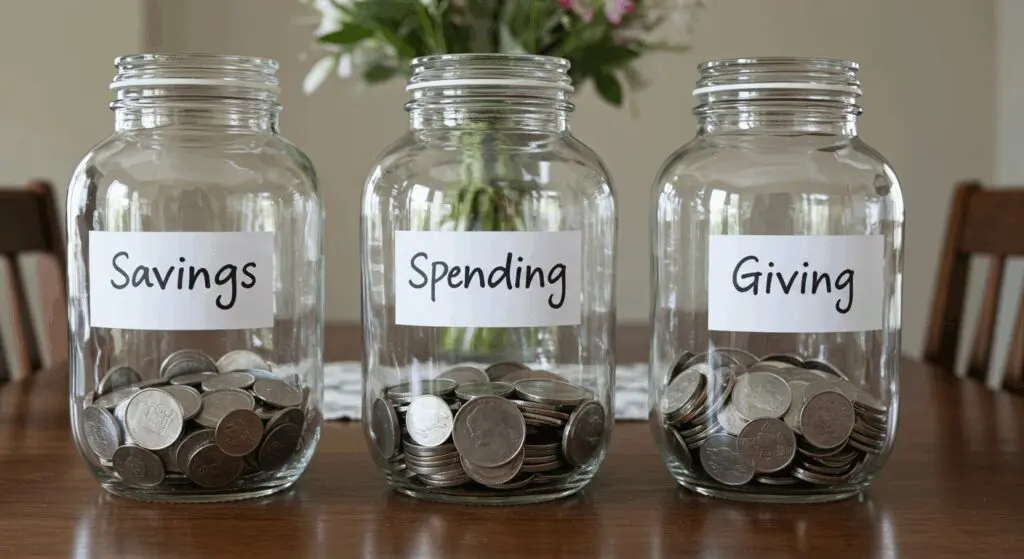
Learning the difference between gross and net pay is the first step. The next step is using that knowledge to build healthy financial habits:
- Check Every Pay Stub.
Don’t just cash the check. Look at the breakdown of gross pay, deductions, and net pay. Understanding where your money goes builds awareness. - Record Your Income.
Write down each paycheck in a budgeting app or notebook. Track net pay, not gross pay. - Plan for Savings and Spending.
Decide in advance how much of your take-home pay will go to savings, spending, and giving. This makes it harder to blow your whole paycheck. - Celebrate Progress.
Every time you budget correctly or save a portion of your paycheck, give yourself credit. Small wins add up to financial confidence.
Once you manage some of the basics of finance like this one, you will be better prepared for things like building credit. If you want to learn more about how to build credit at a young age, check out our article titled, “Build Credit Responsibly as a Teen: Start Now”.
Final Thoughts: Why This Lesson Matters
Gross pay might look impressive, but it’s your net pay that shapes your real financial life. The sooner you learn to budget with take-home pay, the more control you’ll have over your money.
For teens, mastering this difference early means:
- No more paycheck surprises
- Smarter budgeting habits
- A head start on financial literacy most people don’t get until adulthood
When you understand your paycheck inside and out, you’re not just earning money—you’re learning how to manage it like a pro. And that skill will pay off for the rest of your life.
You can build other healthy financial habits by always taking time out to learn the basics of money. In our article, “Keep Learning: Financial Literacy is a Superpower”, we lay out a comprehensive guide to starting your finance learning journey.
We also offer an in-depth course on the basics of finance right here at FINHAP.
For more info, click here.