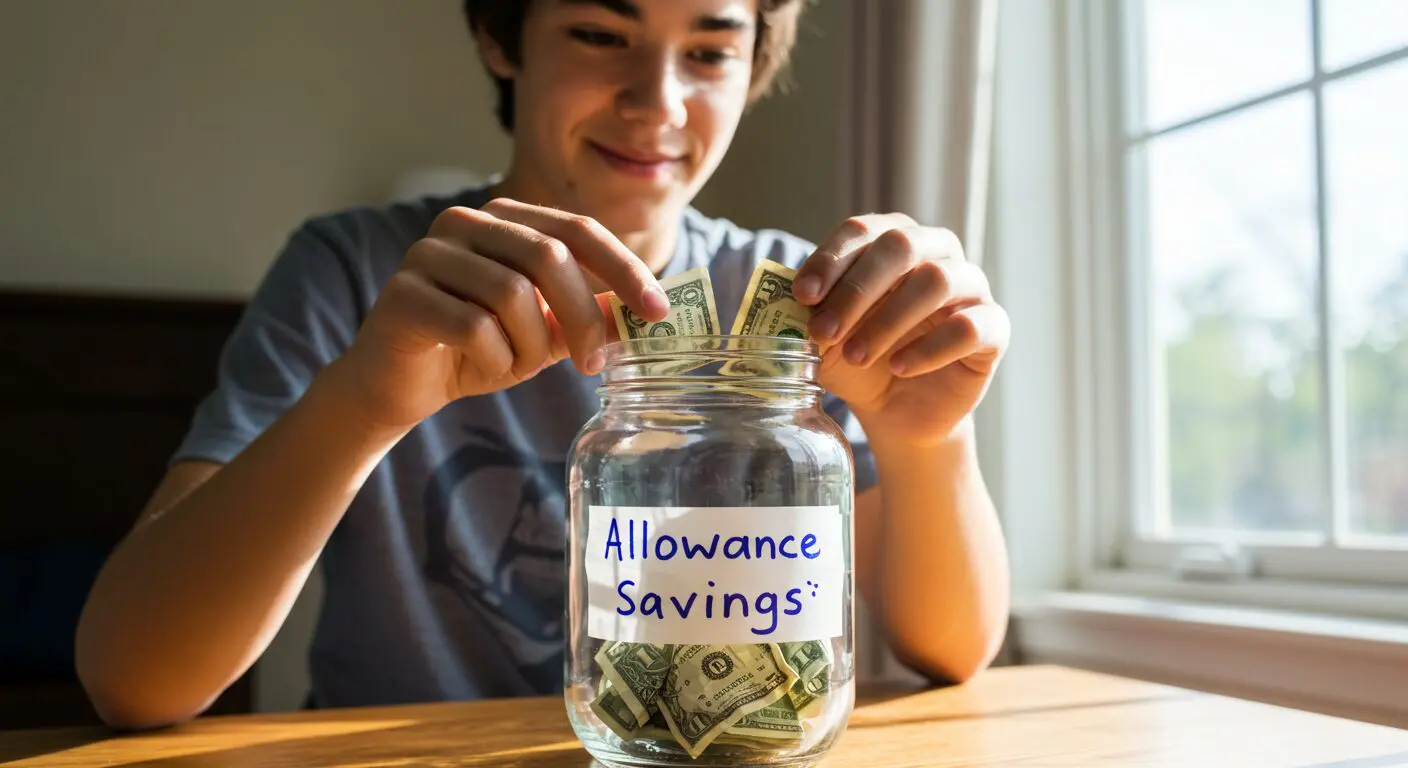
When it comes to raising financially independent kids, allowance is one of the most practical and powerful tools a parent can use. Done right, an allowance isn’t just “free money”—it’s a hands-on classroom for financial literacy. Through allowance, kids can learn how to budget, save, spend wisely, and even begin exploring concepts like investing and charitable giving.
But here’s the truth: not all allowance systems are created equal. There are many routes to go down regarding an allowance system for kids. Some methods unintentionally reinforce bad habits—like entitlement or careless spending—while others help kids develop discipline, responsibility, and a true respect for money.
This guide will walk you through different types of allowance systems, their pros and cons, and how to build one that actually teaches kids about money instead of just handing it over.
And for other tips on how to teach your kids the basics of finance, check out our article titled, “How to Teach Your Child Financial Independence: 7 Smart Strategies”.
Why Allowance Matters
Before diving into the “how,” let’s start with the “why.” Giving kids an allowance isn’t about spoiling them—it’s about preparing them for real life. Consider what allowance can teach:
- Budgeting skills: Kids learn that money has limits and must be allocated wisely.
- Contentment: They experience the trade-off between wants and needs.
- Delayed gratification: Saving for something big teaches patience and planning.
- Work ethic: If tied to chores or jobs, allowance shows that money is earned.
- Responsibility: They gain firsthand experience managing their own funds.
Research shows that kids who learn about money early are more likely to make better financial decisions as adults. Allowance provides a safe, low-stakes environment to practice.
Different Approaches to Allowance Systems for Kids

Parents often wonder: Should I tie allowance to chores? Should it be a set amount? Should I pay for good grades? There’s no one-size-fits-all system, but most approaches fall into three main categories:
1. Fixed Allowance (Unconditional)
This is when parents give their child a set amount each week or month, regardless of chores or performance.
- Pros:
- Teaches money management without tying it to every action.
- Gives kids a reliable “income,” which mimics adult paychecks.
- Great for younger children who are just learning basic money concepts.
- Teaches money management without tying it to every action.
- Cons:
- Risk of entitlement if kids expect money without effort.
- Less connection between work and earning.
- Risk of entitlement if kids expect money without effort.
Best for: younger kids (ages 6–10) who need practice with saving and spending before introducing the concept of earning.
2. Chore-Based Allowance (Money for Work)

In this system, kids are paid only when they complete household chores.
- Pros:
- Strong link between work and earning.
- Motivates kids to contribute around the house.
- Reinforces the value of effort and responsibility.
- Strong link between work and earning.
- Cons:
- May backfire if kids refuse chores when they don’t “need” the money.
- Risk of turning family responsibilities into transactions instead of teamwork.
- May backfire if kids refuse chores when they don’t “need” the money.
Best for: preteens and teens who are ready to understand that money doesn’t come free—it comes from effort.
3. Hybrid Approach (Base + Bonuses)
Many families find success with a blended model: a small, guaranteed allowance (to teach budgeting) plus extra opportunities to earn more through additional chores, projects, or jobs.
- Pros:
- Provides stability while still linking money to work.
- Lets parents encourage independence without over-rewarding.
- Mimics real life, where people have base salaries plus side hustles or bonuses.
- Provides stability while still linking money to work.
- Cons:
- Requires clear communication to avoid confusion about what is “expected” versus “extra.”
- Requires clear communication to avoid confusion about what is “expected” versus “extra.”
Best for: older kids and teens who are ready to start practicing with more realistic income structures.
How Much Allowance Should You Give?
There’s no universal number, but a common guideline is $1–$2 per week per year of age.
- A 7-year-old might get $7–$14 per week.
- A 12-year-old might get $12–$24 per week.
The amount should be enough to practice money management but not so much that they can buy anything they want instantly. Striking that balance is key—if allowance is too generous, the lesson is lost.
Another approach is to tie allowance to specific expenses. For example:
- Middle schoolers might be responsible for buying their own toys or school supplies.
- Teens might handle clothing, outings with friends, or gas money.
This method shifts financial responsibility gradually from parent to child, preparing them for adulthood.
You can also tie allowance to different categories like wants and needs. Explaining the difference to your kids is important in helping them build good money habits. We cover the best way to teach kids wants vs. needs in our article, “Teaching Kids the Difference Between Wants vs. Needs (and Why It Matters)”.
Turning Allowance Into a Teaching Tool
The real magic of allowance isn’t in the money—it’s in the system around it. To maximize learning, structure allowance in a way that encourages good financial habits.
The “Save, Spend, Give” Method
This is one of the most popular and effective systems for kids. Every time your child receives allowance, they divide it into three categories:
- Save: Long-term goals like a new bike, video game, or even early investment accounts.
- Spend: Everyday fun purchases—snacks, toys, outings with friends.
- Give: A portion set aside for charity, donations, or helping others.
This method teaches balance: money isn’t just for fun, it’s also for future goals and generosity.
Example: If your child earns $10 per week, they might put $4 into savings, $4 into spending, and $2 into giving.
Visual Tools Make a Big Difference

Kids learn best when they can see their money. Try these ideas:
- Three-jar system: Label jars for Save, Spend, and Give. Watching money grow in each jar is powerful.
- Envelope method: Use envelopes instead of jars for teens who may prefer more privacy.
- Banking apps for kids: Apps like Greenlight or GoHenry allow digital “jars” and even give parental oversight.
Add Real-World Lessons
- Interest: Pay your child “parent interest” on their savings jar. For example, add $1 every month if they don’t touch their savings. This introduces compound growth.
- Budgeting challenges: Give them a small budget to plan a family snack night or outing.
- Goal setting: Work with your child to set savings goals and track progress with charts or apps.
These activities make allowance more than just pocket money—they transform it into a financial education system.
Common Allowance Mistakes to Avoid
Even with the best intentions, parents sometimes undermine the lessons allowance can teach. Here are some pitfalls to watch out for:
- Bailing Them Out Too Often
If your child spends all their allowance early in the week, don’t top it up. Let them experience the discomfort of running out of money—it’s a safe way to learn real consequences. - Inconsistency
Skipping weeks or changing amounts randomly sends the wrong message. Be consistent, just like a paycheck. - Overpaying
Too much allowance takes away the need for budgeting. Keep amounts reasonable so kids must make trade-offs. - Skipping Conversations
Handing over allowance without discussions misses the teaching moment. Always pair allowance with conversations about goals, priorities, and lessons learned.
Building Toward Independence
Allowance is just the starting point. As kids grow, it should evolve into bigger lessons about income, expenses, and eventually investments. Think of allowance as step one in the financial ladder:
- Childhood: Simple jars for saving, spending, and giving.
- Preteens: Adding responsibility for some personal expenses.
- Teens: Budgeting for clothing, outings, or car costs.
- Young adults: Transitioning into real bank accounts, debit cards, and part-time job income.
By structuring allowance this way, you’re not just handing over money—you’re handing over life skills.
Taking Allowance Lessons to the Next Level
Once your child has the basics of saving, spending, and giving down, it’s time to level up the allowance system so they can practice real-world money management skills.
1. Transition to a Bank Account
For preteens and teens, opening a youth savings or checking account is the natural next step. Most banks offer kid-friendly accounts with parental oversight. Moving from jars or envelopes to a bank account helps them learn about deposits, withdrawals, and even online banking apps.
- Show them how to check balances digitally.
- Walk them through setting up alerts for low balances or deposits.
- Encourage them to set savings goals within the bank app itself.
This bridges the gap between a simple allowance system and adult financial tools.
2. Tie Allowance to Real Responsibilities
As kids mature, their allowance should reflect real-life responsibilities. For example:
- A 14-year-old might be responsible for buying their own clothes with part of their allowance.
- A 16-year-old could cover part of their gas or entertainment expenses.
The goal isn’t to burden them but to mirror adult life in a safe, controlled way. This makes the leap to financial independence after high school far less overwhelming.
3. Teach Them to Track Spending
Handing out allowance is only half the lesson—kids also need to learn where their money is going. Introduce a very simple tracking system:
- Younger kids: A notebook or chart where they write down what they bought.
- Older kids/teens: A spreadsheet, budgeting app, or bank app.
Tracking teaches awareness. It also opens the door for valuable conversations like:
- “Do you notice how much you spend on snacks each week?”
- “What would happen if you saved that instead?”
4. Encourage Entrepreneurship
Allowance can also be a gateway to earning beyond allowance. Encourage kids to start side hustles like mowing lawns, babysitting, dog walking, or selling crafts.
This does two things:
- It shows them that effort equals income.
- It helps them realize allowance is just a starting point, not a lifelong income source.
You can also take this opportunity to introduce investing to your kids. If you need help figuring out the best way to do that, check out our article, “Investing for Kids: How to Introduce Stocks, Savings, and Compound Interest Early”.
Real-Life Example: The $100 Bike Lesson

One powerful way to reinforce allowance lessons is through real-world savings goals.
For instance, imagine your child wants a $100 bike. Instead of buying it outright:
- Work out a savings plan together.
- Agree to contribute “matching funds” if they save half (like a 401k employer match).
- Let them feel the pride of achieving that purchase.
This approach not only makes the lesson tangible but also gives them a sense of ownership over their belongings.
Long-Term Payoff: From Allowance to Independence
Allowance isn’t about the money—it’s about confidence and skills. By the time your child leaves home, they should know how to:
- Create and stick to a budget.
- Save toward both short-term and long-term goals.
- Use a bank account responsibly.
- Distinguish between wants and needs.
- Earn money independently through work or side hustles.
If they’ve learned all this through allowance, you’ve given them something far more valuable than cash—you’ve given them a financial foundation for life.
Final Thoughts
Allowance can be one of the most effective tools for raising financially responsible kids, but only if it’s used intentionally. Whether you choose a fixed, chore-based, or hybrid system, the key is consistency, conversation, and connection to real-life lessons.
Remember: money management isn’t learned in a classroom—it’s learned by doing. Allowance gives kids a safe, structured way to make mistakes, learn from them, and grow into confident, capable adults.
So don’t think of allowance as a weekly handout. Think of it as an investment in your child’s independence—one that will pay dividends for decades to come.
At FINHAP, we offer a full, in-depth course on the basics of all things finance for teens and young adults, so parents can have an academic option for teaching their kids about money.
Schools don’t teach it, but we do.
Learn more here.